Saturday, 13 December 2025

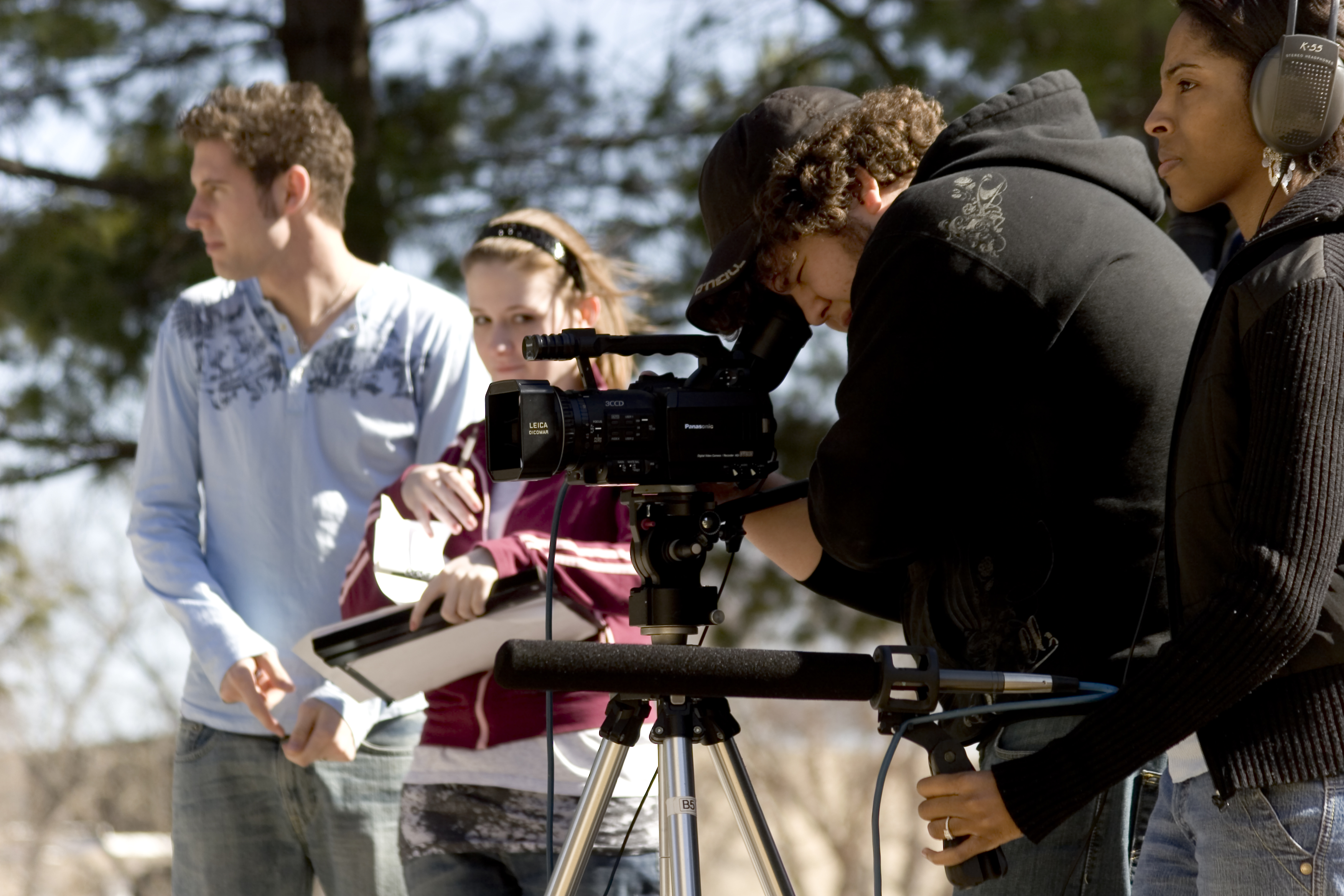
Week 8- Film Safety Production

Most safety on the set is just common sense, but in the pressures of filmmaking common sense often gets thrown to the wind. Every film must have a safety meeting every day filming takes place outlining the potential dangers for the day and mentioning precautions that need to take place to avoid problems. This can be an informal five minute meeting between the assistant director and film department heads (DP, sound, director, art). 

Often this meeting is part of a larger production planning meeting that takes place every morning outlining the shot list shooting schedule for the day. You need to conduct this safety meeting everyday that you film, even if only briefly and informally. Generally, danger on the set comes from the following areas and you should take precautions accordingly. Normally, the Assistant Director is the safety enforcement
officer on the set.
GENERAL CAUSALITY
This involves unsafe placements of sets, props, equipment, and cables so people trip and injure themselves unnecessarily. The prop master should
give a daily report as to that day’s props and any and all hazardous threats related to the same. Any sharp edged props (including knifes) should be handled with great care. Horseplay should never be tolerated at any time while cast and crew are present on the set. No person should be coaxed into handling any prop that causes them concern.
ELECTRICAL HAZARDS
Since large amounts of electricity are used for lights-the danger of blowing out circuits, overloading circuits and even starting a fire or electrocuting someone are always a hazard. Your lighting person should be familiar with capacity
limits and safe procedures for drawing and using electricity. If you are using more than two 650 watt bulbs or one 1000 watt bulb on a single home electrical circuit, you are in danger of blowing out the circuit. There may be several wall plugs on one circuit -so don’t just assume each wall plug is a separate circuit. A normal home has about five different circuits, but this can vary. Become familiar with where the circuit breaker box is, or have extra fuses for the circuits. Power should be turned off when plugging or unplugging high wattage equipment. To unplug any equipment, always grab the plug firmly and pull, do not grab
the cord.

FIRE HAZARDS
Placing powerful lights near flammable materials (e.g. curtains) for several hours on end can cause a fire. People smoking (including in film smoking) on a set with scattered paper and flammable materials and set dressing around can cause a fire. You should have a small fire extinguisher present on all sets. Obviously using a fire in the film (e.g. campfire or part of a set burning) can be a hazard.

FIREARMS
Any time guns with live ammunition are used on the set a licensed firearms expert is required by law to be present on the set supervising the scene.
However, even the use of unloaded weapons or rubber or fake weapons can be a hazard in that when the police or neighbors see what looks like a weapon they
may assume that it is and often act first and ask questions later. The safest choice for films made on this short notice is not to include weapons
in your film. And never include weapons in your film where they are displayed in a public place unless you have a city permit that specifies that and have cleared that permission.
ANIMALS
Snakes and deadly animals can be a hazard on the set and you need to have an exotic animal handler on the set to work with these. Rates per day for such people (who will often bring their own animals) may range from $500 on up. Ordinary household animals need to be treated safely on the set or there could be legal action from the Humane Society. If you are doing anything other than very ordinary shots of even household pets on a set, the Humane Society likes to be notified so they can be on the set. Make sure you have a place for the
animals to rest apart out of the sun and away from the crowded set where they could get hurt. Have plenty of water and food for them.

CHILDREN, THE ELDERLY, AND THE DISABLED
Special precautions need to be made with children on the set to keep them from hazards that adults would normally avoid. That is why a parent or guardian must be with them at all times. Minors can only be filmed so long without having a break (usually in the 2-4 hour range depending on age). Also, special precautions need to be made on the set for the elderly and disabled. Again this is common sense, but it is more likely that an unbalanced elderly person might trip over power cables running everywhere than a grip. Passage from one part of the set to another may be impeded for a disabled person. Preparations need to be made for these contingencies.
  
STUNTS
Even what are considered normal actions in everyday life can be considered stunts in filmmaking; e.g. tripping. And if in performing your script, an actor attempts a minor fall and hurts themselves, you could be liable. Any stunts, even minor ones need to be planned out and rehearsed so no one is hurt. Larger stunts should only be performed by licensed stuntmen and only after very careful preparation and rehearsal. Fights should be carefully rehearsed so no one gets hurt and should be staged by a professional stuntman. Truly
dangerous stunts: falling from buildings, car crashes, car hits, death defying stunts, etc. should not be attempted in your short film.
DRIVING AND MOVING SHOTS
Careful preparation needs to be made for any moving shot. All traffic laws must be followed, and the person driving the car (especially if it is an actor on camera) should never be distracted by too much direction or while he or she is driving. Any moving shot on a public street requires a permit obtainable through the Mayor’s Office and often requires police officers to be present. If a sizable number of crew are present on the street (e.g. more than two) during filming it can create a distracting hazard to other motorists and cause accidents. This is
why permits are required. 
Also, blocking traffic to get a shot is not allowed unless police officers are present. The production team needs to make sure shots are planned out and rehearsed in advance so an accident knocking down heavy equipment does not happen.
OTHER HAZARDS
These will vary from film to film and you need to use common sense to spot these. For example, if you are filming in high places, you need to take precautions that all actors or crew are not put in jeopardy of falling. Filming at night presents its own hazards in terms of people not seeing potential hazards
early enough. You need to brainstorm potential threats on the set and be prepared for them-e.g. rope off sections of the set to cast and crew when not in use. Be careful in having a lot of guests on the set. Since they will be least familiar with what you are doing they potentially will stumble into the most danger. The safest thing is to close the set to guests; but if you do have guests, assign one crew member responsible for looking after them.
FIRST AID
The Assistant Director (or designated safety officer) should have directions and phone numbers to the nearest emergency rooms to all locations at which the crew will be filming. There should be a basic first aid kit on every set. These are easily obtainable at most drug stores. There should be one person on the set who has some first aid training designated as the first aid person who can see if a minor injury or medical condition that arises can be dealt with on the set or if it needs immediate medical attention.

PERMITS
Technically, permits are required by the city for ALL locations (including
filming in your own home) to insure that if anything the filmmakers are doing is unsafe that they city can shut down the film shoot immediately. The only
place permits are not required are when a shoot is on the lot of a registered film studio back lot or soundstage. Generally however, local authorities will
not check permits unless you are filming with a large crew and a lot of vehicles in a location where you are creating “an attractive hazard” to automobile traffic flow, or pedestrians on the streets, sidewalks, or in public places where an accident could occur.
COMMON SENSE
Most of what has been said above is common sense. And if you apply common sense,anticipate possible dangers, do all possible preparation to avoid them, and hire licensed professionals when the risk factor and state law requires it, you should not get into trouble. Everyone on the set is responsible for safety. Don’t let a driven director or producer push anyone to do something that is unsafe. Any member of cast or crew who anticipates a danger on the set, or sees an actual hazard should immediately report it to the Assistant Director or
designated safety officer on the set.
LAST WORD
Good films can be made in a week, but there are some limits to making a film in
weekend, and doing it safely. You may not be able to do everything just as the budget will limit you somewhat, so will the time limits on safety prep limit you to making films that may not have some riskier shots in them. You need to be aware of and accept these to run a safe set.

Week 8 -Tips for pre production pt.3


2. Establish Your Needs
You've outlined your production. You're focused. But you still need to do a few things before grabbing your camera and start shooting. It's easy for some of us, to remember "camera, tape, battery, tripod, light" but other needs play an important role in pursuit of your Great Video Production. When we read the more than occasional account of forgotten tapes, batteries running dry in the middle of things and malfunctioning buttons, focus rings or connections, we realize even the basics can be overlooked.

Yes, you need a camera and its essential components. You also need redundancy of backup, extras of the items essential to the success of your acquisition. Establish the length of your production and know how much tape, portable hard drives, blank disks or solid state cards you will need. Even a tripod might not be enough. Will some of your shots require a higher level of mobility or stability? Will you need a camera stabilizing unit or perhaps just a monopod? A beanbag support and flexible cords?
There's a lot of needs that are not always so obvious even when you do sit and write them all down, but taking the time to think about and establish your needs will help avoid overlooking the tools essential to your acquisition success. What you are going to shoot and where, the weather or location climate , the time of day all have a bearing on what you will need and how much of it to bring along. Make sure your ditty bag and grip box have the essentials before heading out for your first day or hour of shooting.

Week 8- Tips for pre production pt.5


5. Bring it all Together

Are your first four steps necessary or even crucial to the success of your production? No. Just as there are writers who tell of a moment of inspiration that led to an all-nighter and a complete script or novel alongside the morning hot tea, there are occasional unique creative go-for-moments in video. No outline, research or planning. The occasion, however, is rare and nearly always not perfect. While perfection is a goal, not a destination, you know what I mean.

What will get you closer to a satisfying outcome from your opening moment of inspiration is planning your shoot. A few simple note cards with shot ideas and concepts listed might be enough for you, just make sure your batteries are charged. Taking a little extra time to prepare rather than impulsively attacking your project will keep you inspired and prevent that horrible moment when you realize you need to abandon the production or start over.


Look at advance preparation using the five steps above as what you have to do before you can have some fun. Doing so will make what you want to do not only fun but satisfying and successful. The more you plan first, the more flexible you can be when the good stuff starts making your production a joy rather than a job.

Week 8- Tips for pre production pt.4

4. Do this Now, or Earlier

If you have serious dialogue, want to follow a tight production path for content and narrative you will need a script . Your script doesn't have to be formal or perfectly formatted, though that can help others in your production crew who might be more familiar with standard script terminology. A simple basic outline of what needs to happen when and what needs to be said when will keep your production focused.

Your script makes possible another important production/directing element and that is your shot sheet. This is a list of what has to be videotaped with or without audio to accomplish your vision, to satisfy your inspiration.

Without a list - definitive or not - you will miss must-have shots and not recognize areas during production where you need to improvise, adding shots that establish a script and shot sheet can be mission critical. It can also come in earlier in the planning and development of your Great Video Production but I've found that following my inspiration, determining what I will need to make it happen and deciding what approach I want to take, what format, helps me better establish a script and from that the shots I will need to make it all come together.

You need to recognize situations like time of day, outdoors or in, daylight or nighttime, camera placement, location availability, weather conditions and a host of variables that will affect what you capture. These notes are easily placed alongside your described shots and will keep you alert to necessary improvisational changes.

The production "big boys" have all this and more going into actual production but still discover the need for script additions, deletions or changes and have re-writes done mid-shoot. This isn't cost effective and can be wa-a-a-y counter-productive, but it happens. The more prepared you are going in, the more satisfied you will be with your production going out.

week 8-Tips for pre production pt.2


3. Mixing it Up

You also need to know how you plan to present your subject before shooting. What I mean by this is you need to decide if your production is based on action, dialogue or a combination of the two. While an acting coach in a class I once attended stressed that "dialogue is action" you have to know how you want to present that. Determine if a talent behind a desk or sitting in a chair - your basic talking head approach - is sufficient or if you want to include reenactments, graphics or other titling in your production to enforce its audio and visual impact.


Are you going to go a documentary approach, using interviews, archival images with Ken Burns-style movement, on- and or off-camera narrative (voice over). Will it be casual or highly scripted with a need for complex dialogue? You might be going for strictly entertainment with lots of action, comedy, "dramedy" (comedy-drama) or bodacious special effects. On the other hand much of your production could be created in the computer with a host of CG elements.

There's a myriad of approaches beyond the above-mentioned: ENG (electronic news-gathering), newscast, the herkey-jerkey amateur style of the 2008 movie Cloverfield, perhaps a creative musical you've scripted and want to self-produce. The sky is the limit, so to speak but there are always practical limitations.

Knowing the primary style you want to use doesn't mean you can't mix it up. You just have to be aware of what you want before the shooting starts and plan for that. While you're rolling tape you can bounce from one improvisational act to another at your heart's desire. Mixing it up might not endear you with any purists out there but you could become the next Matt Reeves, Rodriguez or Tarantino with your avant garde approach.


Week 8 -Tips for pre-production pt.1


Just about every video producer, rank and file, from first time beginner to award-winning professional likes to grab the camera and run, shooting whatever inspiration has seized the moment.
There are times when serendipity plays a role in our productions but more often than not we need to be a bit more prepared when we want to create a quality production. Otherwise, we tend to overlook or forget something crucial. Having a plan more often than not works better than guerrilla-style run-and-gun, especially if you're taking your video beyond the "reality show" environment, into a more polished presentation.

These steps will take you from inspiration to "it's a wrap" without interrupting your creative flow. You might in fact find yourself better able to take advantage of a "serendipitous or inspired moment" with a solid outline that guides you through your production day or days. Speaking of reality shows, I hear most of those productions take a planned path to capturing the moment.

1. Practical Inspiration vs Your Muse

In our minds we often "see the whole thing" from opening title to closing credits - creative inspiration. We play and replay the whole scenario like a Star Wars, Titanic or Avatar production and think we can keep all those wonderful shots in our minds - right there, when the camera starts rolling. In reality we need to be more practical. Taking the time to simply jot down, if nothing more, a list of inspired shots helps us as the practical part of our inspiration moves front and center.
So, you first need to establish what you want to do and separate that from what you can do. Being practical about the possibilities will avoid disappointment and carry you to a finished production of which you can be proud of.


Ask yourself key questions. Can I actually pull this off? Can I afford it? Do I have the level of inspiration and commitment necessary to carry it through? Can I find the right talent? Locations?
Think about your goals for this video production. Is it for fun? Will it be basically a learning tool? Do I want to create something that will go viral on YouTube? Is this going to be a commercial production? A film festival entry? Will this become my demo show-piece?
Knowing your project expectations, writing them down and making decisions at the beginning will give you a sense of purpose and direction, not to mention the confidence, to take it all the way. Yes, be inspired but force yourself to be practical as well. You will need both in the face of possible upcoming adversity - those Murphy's Law moments.

Monday, 1 December 2025

Week 7-Cutting on Action

 The biggest challenge of a video editor is to make the editing unnoticeable. Cut in action (also known as matching on action) is one editing technique that will help you to do that. In this lesson, I will teach you everything you need to know about cutting on action from the shooting stage and the editing.

What is Cutting on the action?

Wikipedia’s definition of cut in action is a “video editing technique where the editor cuts from one shot to another view that matches the first shot’s action”. It means you change the angle of the camera in the middle of the action of the lead character. The technique helps the video editor to make the cut more smooth and unnoticeable. Some times this type of cut will even help you to hide continuity problems that were made during shooting, Cutting on the action also helps to draw the audience into the story. For example, you can have a character typing on the computer, and while he types, we cut to his fingers. this type of cut can make the scene more intense like you can see in this cutting on action example

Week 7-Match Cut in film

Match cut basics The match cut has been involved in arguably the greatest moments in cinema, and in some cases they are the greatest moments in cinema. Cutting from scene to the next is a necessary filmmaking convention but that doesn't mean it has to be done without meaning or purpse. Images and sounds can carry subtext. 

The same goes for your transitions and each one is an opportunity to make connections, strengthen theme, accelerate pacing, and more. Transitions like the graphic match, match on action cut, and sound bridge are excellent ways to achieve these benefits.

 What is a match cut?

A match cut is any transition, audio or visual, that uses elements from the previous scene to fluidly bring the viewer through to the next scene. They also have the ability to do so with both impact, and subtext. They differ from regular cuts because they provide a thematic connection between two separate events or concepts.

Types of graphic match cuts

Graphic match cuts can be used as visual metaphors. They imply that the objects are one-and-the-same, and they do this through a visible transformation. You can also use graphic match cuts for a seamless passage of time. It can be with a dissolve or a straight cut.

How much time has actually passed will help you decide how you go about one of these cuts, but it’s all about the feeling you want to create. You can graphic match cut across multiple transitions, allowing a single physical object to act as a visual throughline for your scene.